

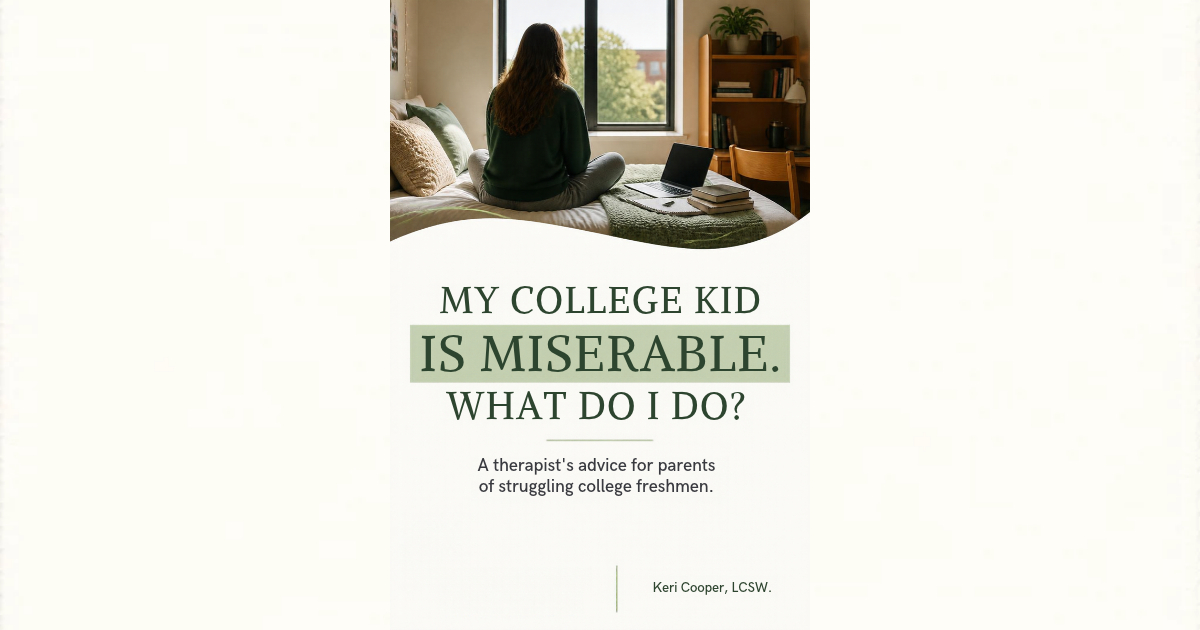
“My College Kid Keeps Calling Me Miserable. What Do I Do?”
Have you been dreading the phone calls? Your college freshman calls you, and before you’ve even had a chance to say hello, they’re crying. They hate their roommate. They have no friends. Everyone else seems to have found their people, and they spend their weekends alone. Your heart sinks. This is not how you imagined it.
And then comes the sentence every worried parent dreads:
“I hate it here. I want to come home.”
As a therapist who works with college students, I hear this story all the time, especially during the first semester of freshman year.
First, take a breath. Your child struggling does not automatically mean they chose the wrong school or that college isn’t going to work out for them.
College is a HUGE transition. They’re adjusting to new classes, new people, a new living environment, and an entirely different level of independence. Even students who were confident, happy, and socially successful in high school can find this transition incredibly difficult.
So, what can you do when your college student calls home miserable?
1. Remind Them That Everyone Does NOT Already Have A Friend Group
I can not tell you how often I say, ” Everyone does not already have a friend group.”
I always tell them the same thing: No, some people have just found other people to cling to right now. It’s survival, people just find others to have dinner with and go out with. These are not necessarily their friends, just people for the “right now.” Everyone is still looking for their friends.
Friend groups change throughout freshman year. People meet others in classes, join clubs, find people with similar interests, and discover who they genuinely connect with.
But here’s the important part: Your child has to put themselves out there.
Encourage them to attend club meetings, go to campus events, talk to the person sitting next to them in class, and invite someone to grab lunch.
Sometimes, they might even have to ask, “Hey, what are you doing this weekend?” or “Would you mind if I came along?”
I know. That’s uncomfortable. Nobody wants to feel like they’re inviting themselves.
But making friends requires taking some social risks.
And if your child had wonderful friendships in high school, this can be especially hard. They know what it feels like to have their people, and they miss that connection.
2. Take Homesickness Seriously, But Give Them Room To Adjust
Homesickness is real. Your child can be excited about college, want independence, and still desperately miss home.
They miss their bedroom, their family, their pets (honestly thats the one I hear about most!), their routines, and the comfort of knowing exactly where they belong.
It’s tempting to stay on the phone with them for hours, answer every text immediately, and check in constantly to make sure they’re okay.
Of course you want to help. But doing this is actually hurting them.
Sometimes being in constant contact with home can make it harder for a student to settle into their new environment.
Stay connected, but try establishing a regular check-in, such as a phone call once a day, while allowing your child time to build a life on campus. And… you don’t have to respond to every text immediately, go make yourself busy.
This isn’t about ignoring your child or withholding support. It’s about helping them develop confidence in their ability to manage difficult feelings while they adjust.
You can say, “I know this is hard, and I’m here for you. What is one thing you can do today to make campus feel a little more like home?”
The goal is to support them without accidentally making home their only source of comfort.
3. If They’re Struggling Academically, Help Them Find Resources
Sometimes students are overwhelmed by their classes, surprised by how much work college requires, or worried because their grades aren’t what they expected.
Before assuming they can’t handle college, help them identify what’s going wrong.
Are they attending class? Keeping track of assignments? Understanding the material? Studying effectively?
Most colleges have resources such as tutoring centers, writing centers, academic advising, and professor office hours.
Encourage your child to use them.
And remember, the first semester is an adjustment. Try not to panic over every disappointing grade.
4. What If They Really Are At The Wrong School?
Sometimes a college genuinely isn’t the right fit.
College is a little bubble, and sometimes it’s simply not your child’s bubble. That’s okay.
In more than twenty years of working with college students, I’ve worked with only two students who ultimately transferred schools. Those decisions weren’t made lightly. We explored ways to improve their situations, worked on their challenges, and considered whether they could change anything to make it better.
When it became clear that they were still unhappy, we worked through what a different school might offer and how they could approach that next step successfully.
I generally encourage students not to give up before they’ve given college a genuine try. Sometimes, the first few months are about getting through the uncomfortable part of building a new life.
But giving a school a fair chance doesn’t mean ignoring persistent distress or forcing a student to remain somewhere that isn’t working.
If transferring becomes the best decision, the goal is to make that decision thoughtfully, with a clear plan for what comes next. Please do not make that decision within the first month unless there is a massively serious concern that professionals have been brought in on. I always encourage them to get through the first semester before having the transfer conversation.
5. When Should You Be Concerned About Their Mental Health?
There is a difference between struggling with a major life transition and experiencing mental health difficulties that require additional support.
If your child is persistently overwhelmed, increasingly withdrawn, struggling to function, or experiencing significant anxiety or depression, don’t wait for things to get worse before seeking help.
College counseling centers can be a good starting point. Some students, however, feel more comfortable speaking with a therapist outside their college community. Telehealth can make that option accessible even when your child is away at school. As a therapist I have seen into many dorm rooms, libraries, and even parks on campus while on telehealth with my clients.
If you’re concerned about your child’s mental health, getting support early can make a meaningful difference.
If you believe your child is in immediate danger or may hurt themselves, call 911 or seek emergency assistance. Don’t rely on routine check-ins or a future therapy appointment when immediate safety is a concern.
One Last Thing for Worried Parents
You don’t have to fix every problem your child brings home over the phone.
Sometimes they need you to listen. Sometimes they need encouragement to take the next step. Sometimes they need additional support.
And sometimes, they just need more time.
Your child doesn’t have to love every minute of freshman year. They don’t have to find their best friends in the first month. And they don’t have to have everything figured out by Thanksgiving.
Often times parents actually think their child is much more miserable than what they really are. Too many times I have had a clients mom tell me she can’t eat or sleep because her child is so miserable, meanwhile I know that kid just had dinner with a friend. Sometimes 90 percent of their day is OK but when they call you they just dump the 10 percent that was awful. So try to keep it all in perspective.
If your college student is struggling, you don’t have to figure it all out alone, reach out.
I offer telehealth therapy in New Jersey (and in person), Pennsylvania, Vermont, Delaware, South Carolina, and Florida. More states are coming as state laws change.
You can learn more about my practice and contact me through Keri Cooper Holistic Therapy.
You can also follow me for more information and practical guidance for parents navigating the college years. @kericooperholistictherapy
For college resources: College Ready By Keri